
Cervieri Monsuárez Foundation
An art gallery featuring a public facing façade of traditional Inca masonry situates the composition within a historical frame of reference and, through its authentic construction, creates a unique and compelling narrative that draws attention to an often overlooked and underrated area of José Ignacio.
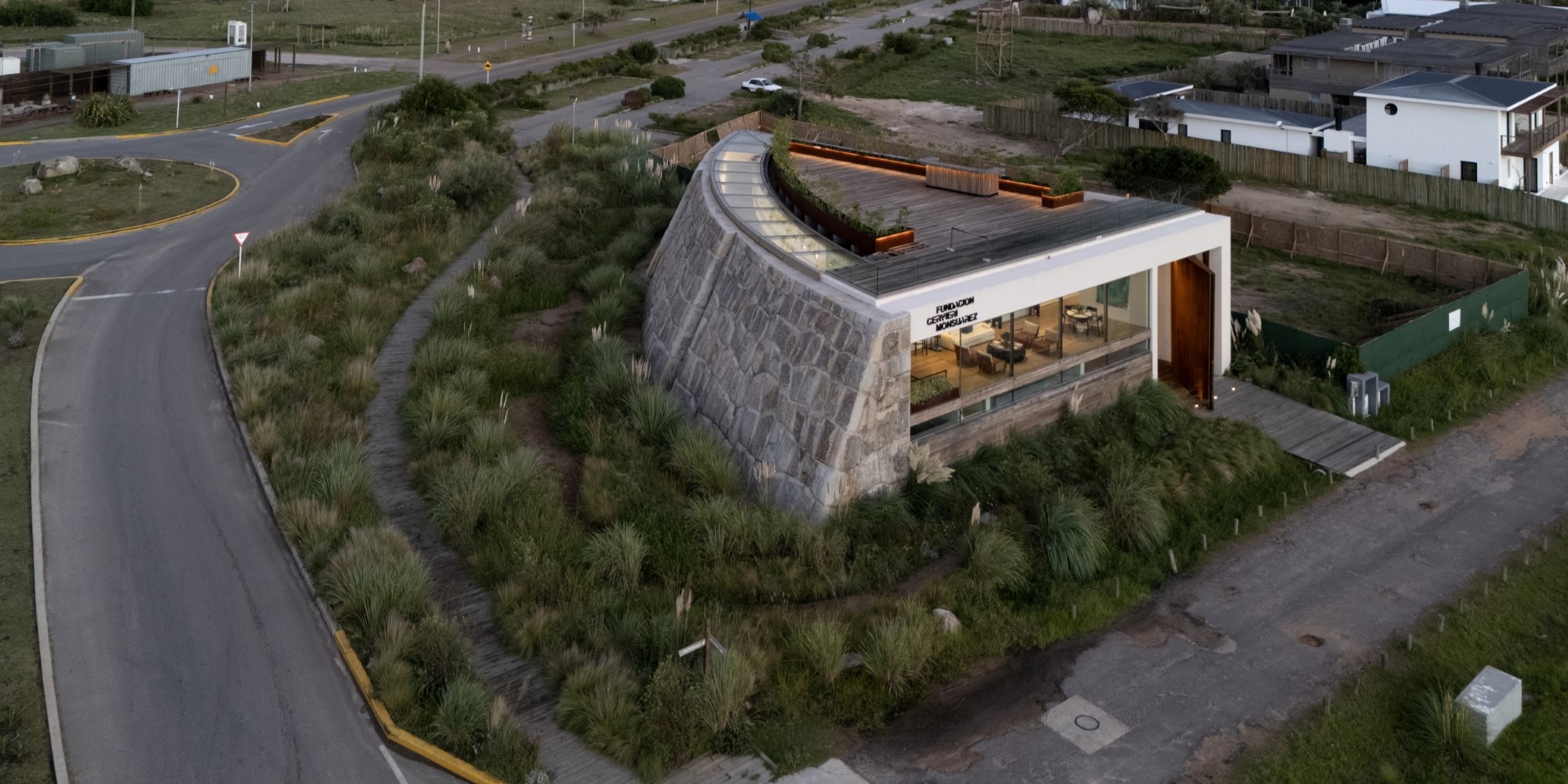
Situated at the entrance to José Ignacio, a popular beach town along Uruguay’s Atlantic Coast, the Cervieri Monsuárez Foundation art gallery, designed by Rafael Viñoly Architects was conceived both as a flexible space for exhibiting and disseminating contemporary Latin American Art and as a sculptural and cultural destination.
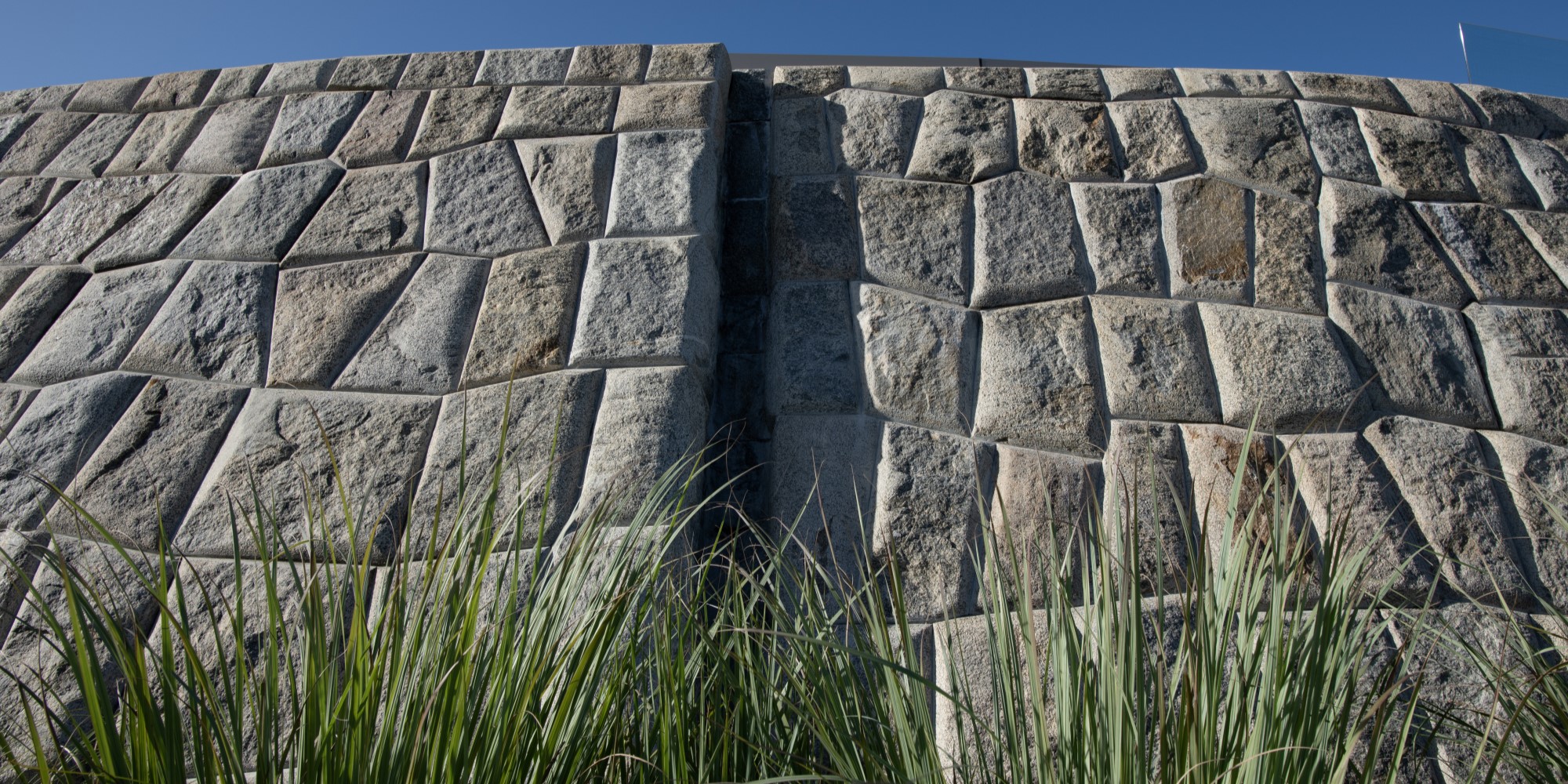
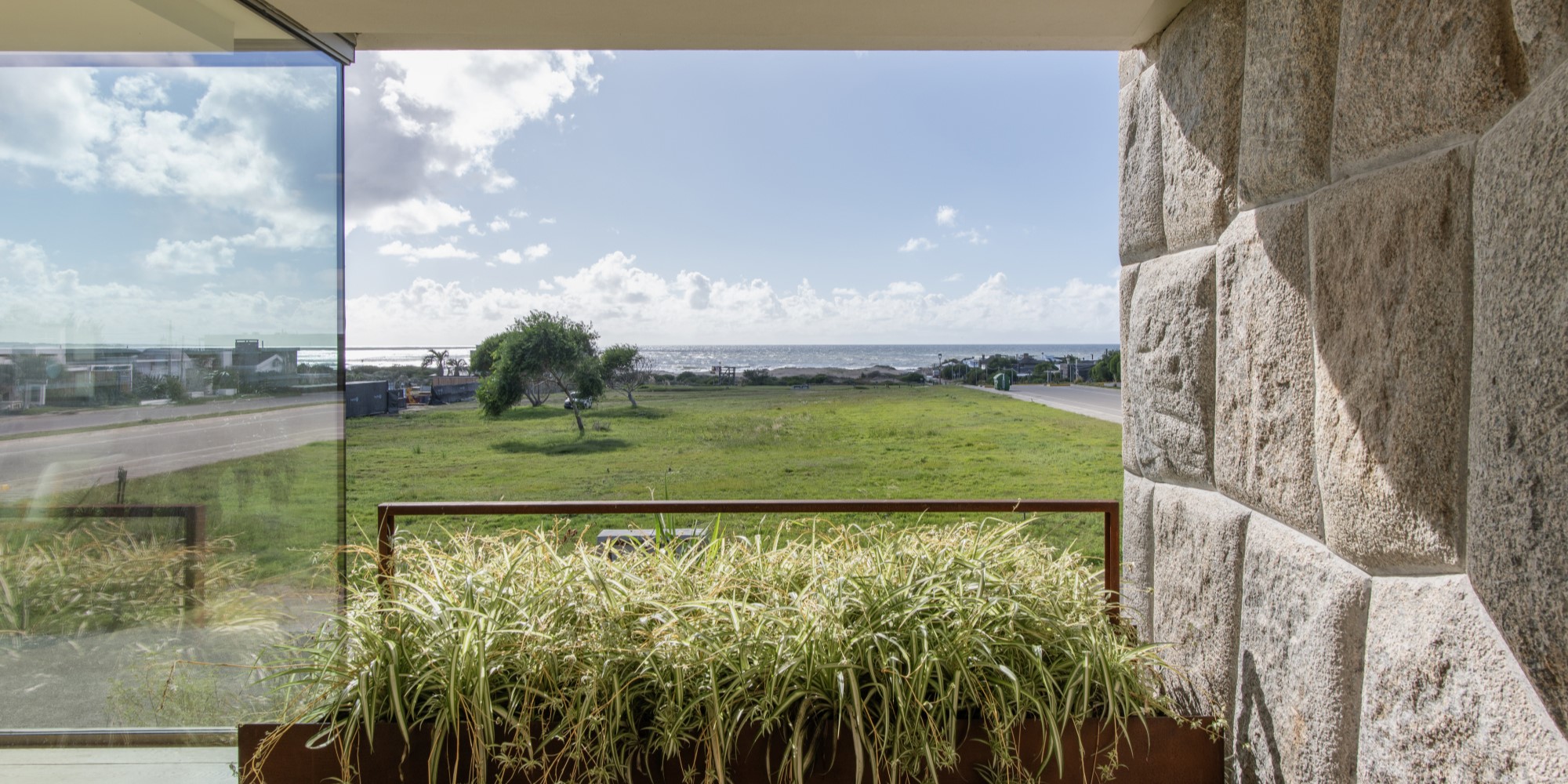
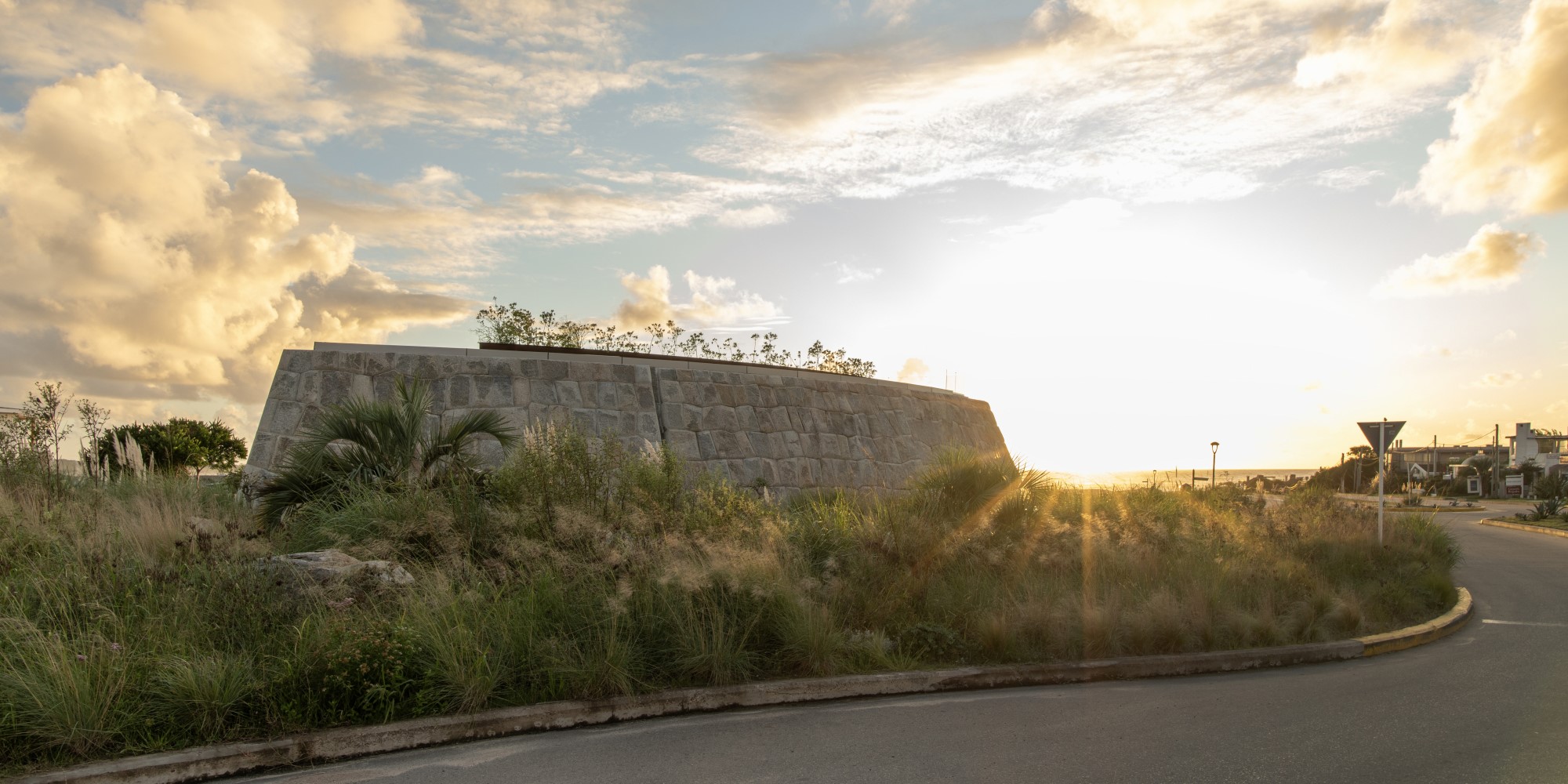
Beyond fulfilling the internal requirements of an art gallery—capable of accommodating a wide diversity of artworks and exhibit types—the design is inspired by the desire to provide a unique and fundamentally different experience to the rest of the peninsula, in both scale and materiality. Enormous masonry blocks on the curved wall front the roundabout at the town’s entrance and the entire composition, as though it were extracted from Machu Pichu, is crowned by large plantings on the roof.
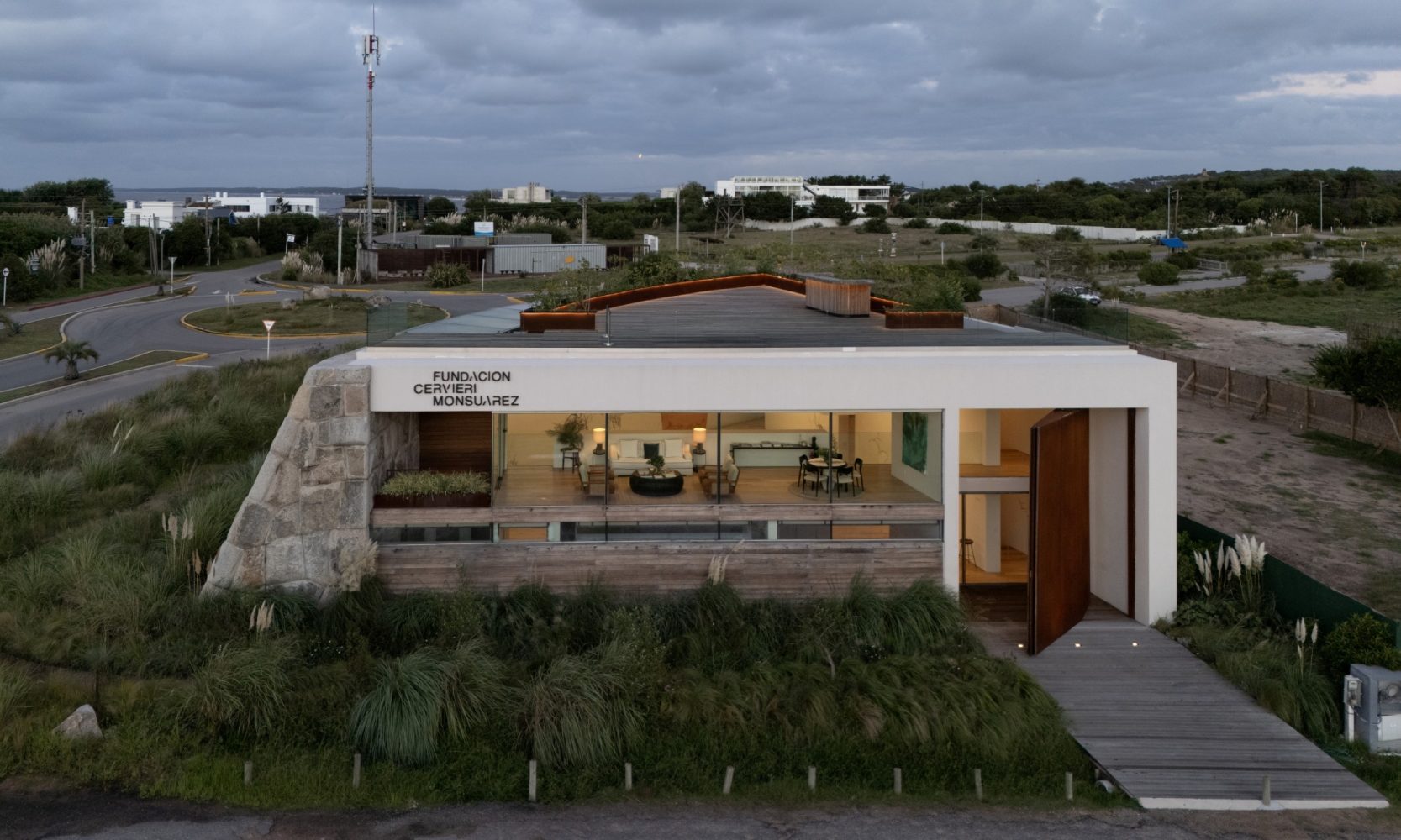
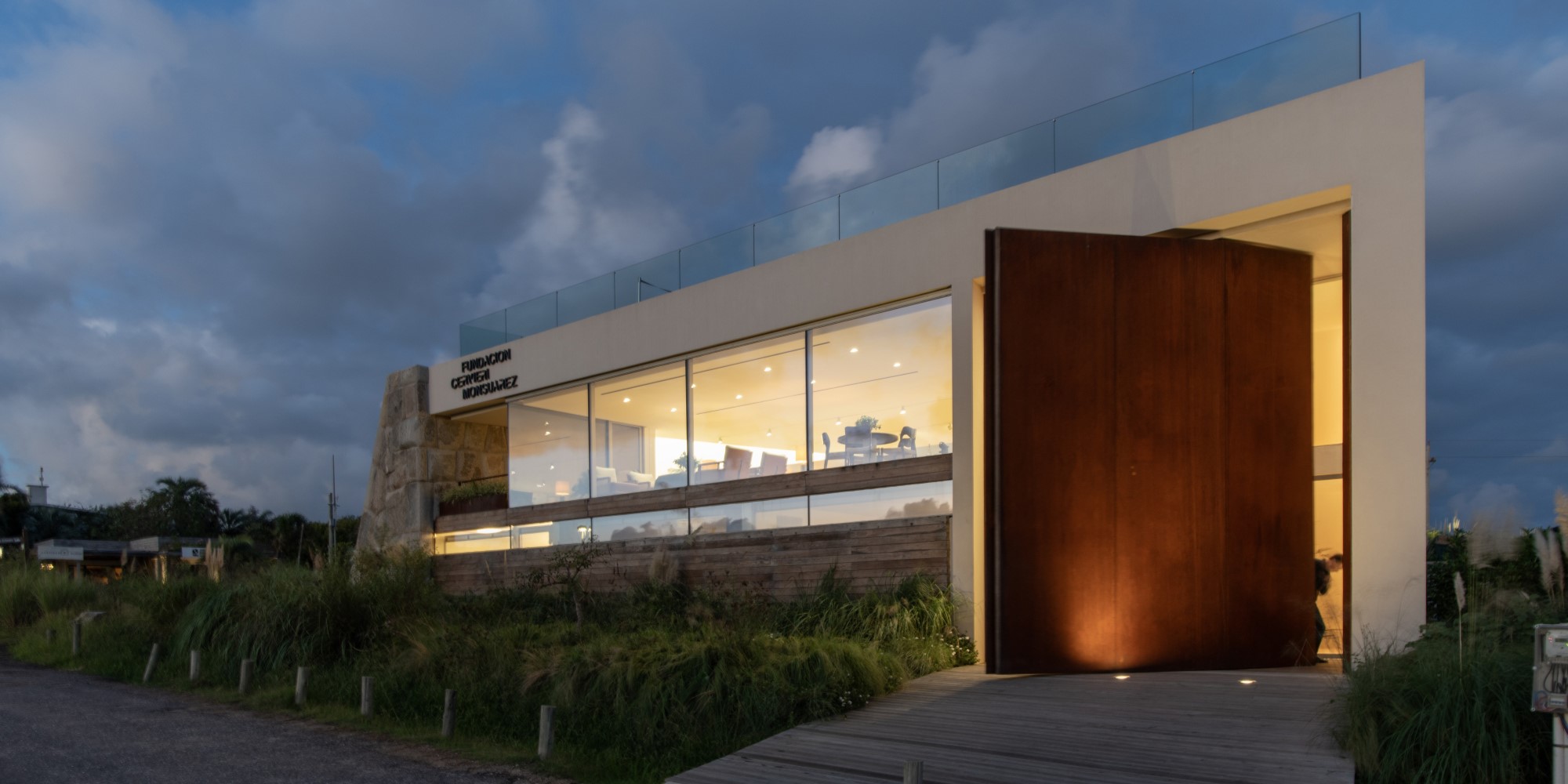
The project follows the asymmetrical shape of its site, a right triangle whose hypotenuse is distended in an arc some 50 meters in length. The building follows that precise shape, with the minimum allowable set back from the lot lines to generate the largest possible internal area and allowing a wide variety of pedestrian perspectives toward its sculptural form. Its two-story exterior is defined by a simple white wall to the north, a mostly glass façade to the east, where the main entrance is located behind a 6-meter-high monumental Corten steel pivot door, and to the south, a large wall of monumental granite blocks hewn with the traditional method of the Incas. Being the main façade of the project, this curved, slightly inclined and monolithic element presents a quasi-geological shape that over time will assume an increasingly naturalistic patina.
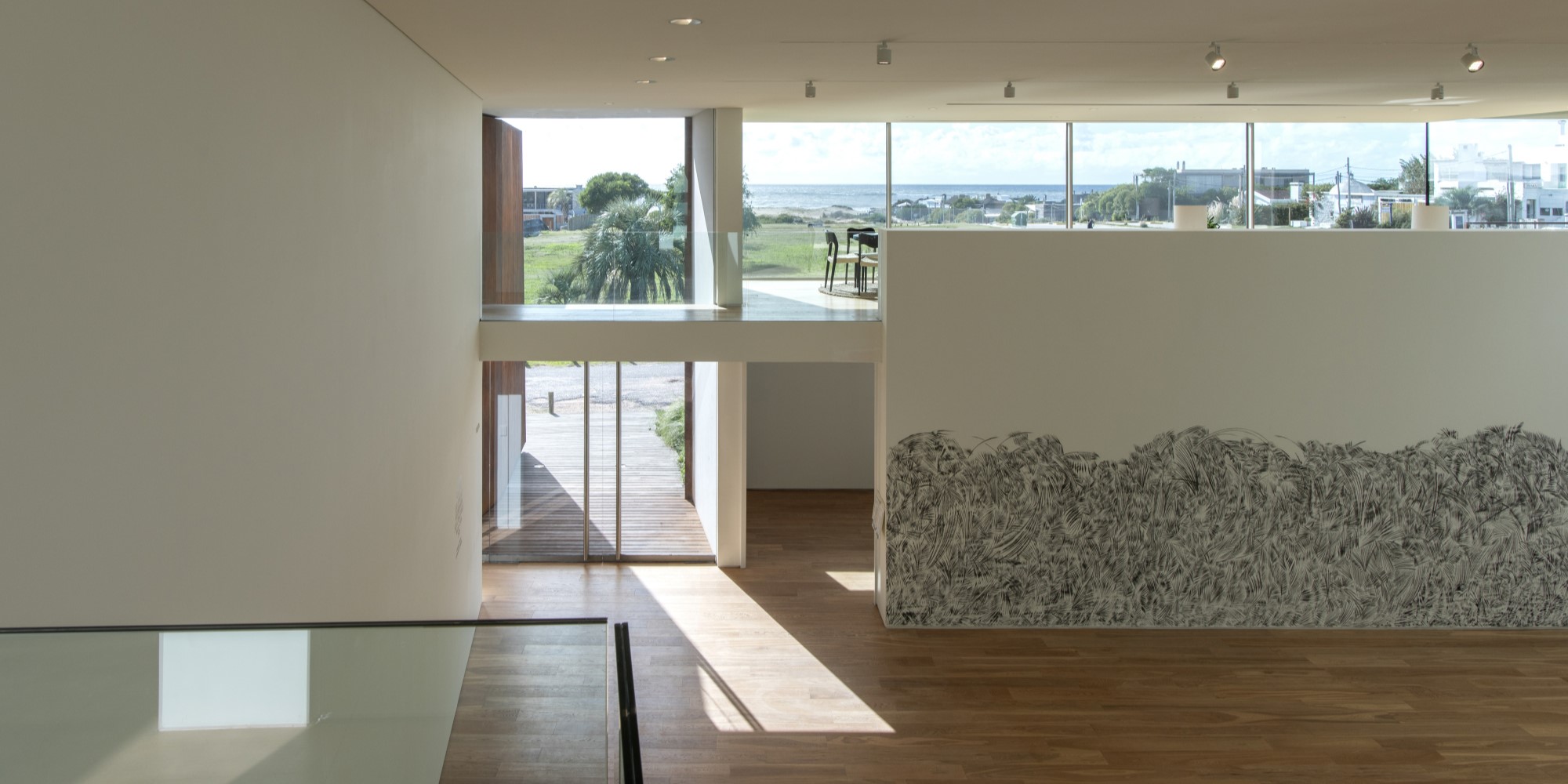
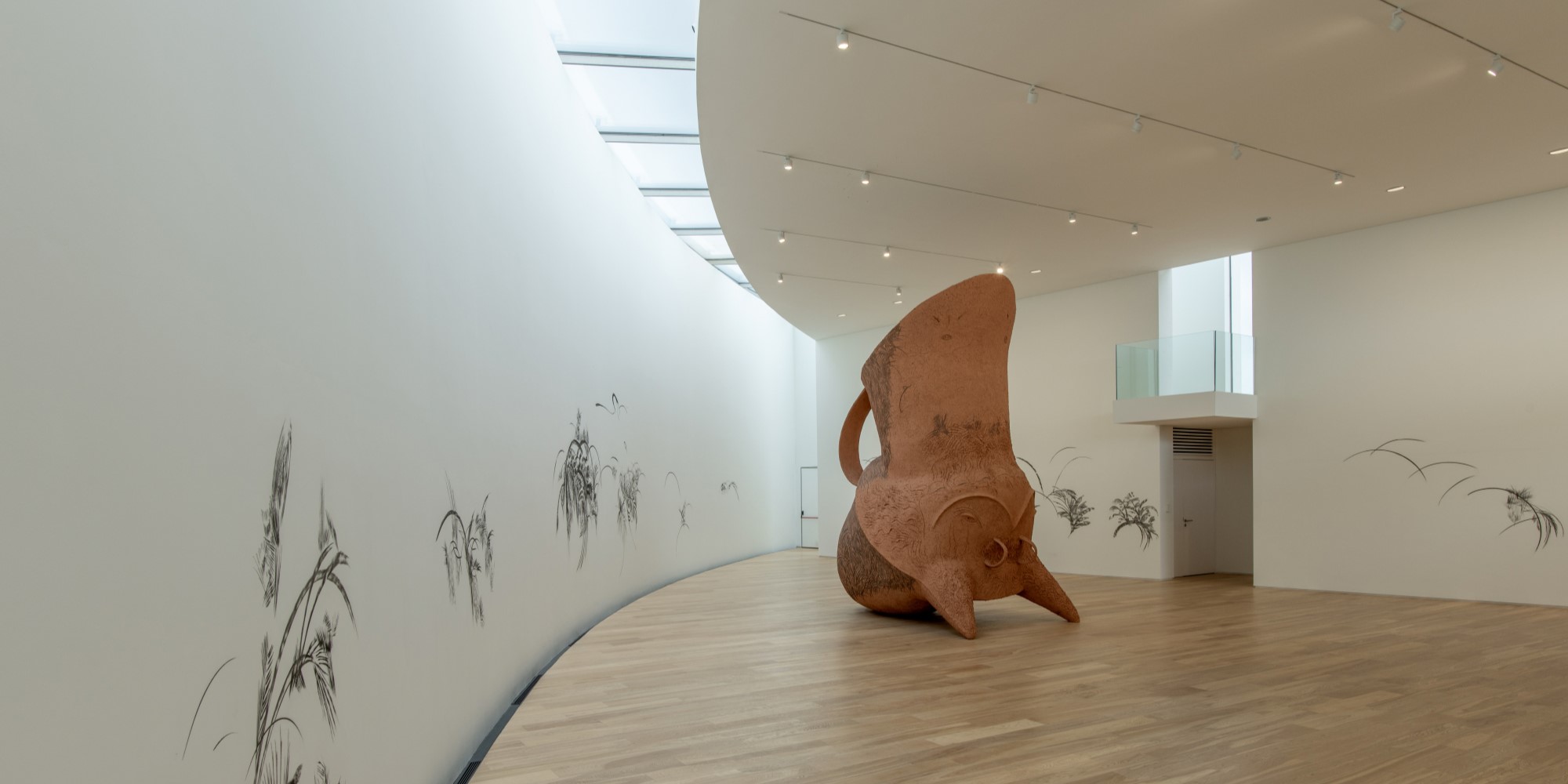
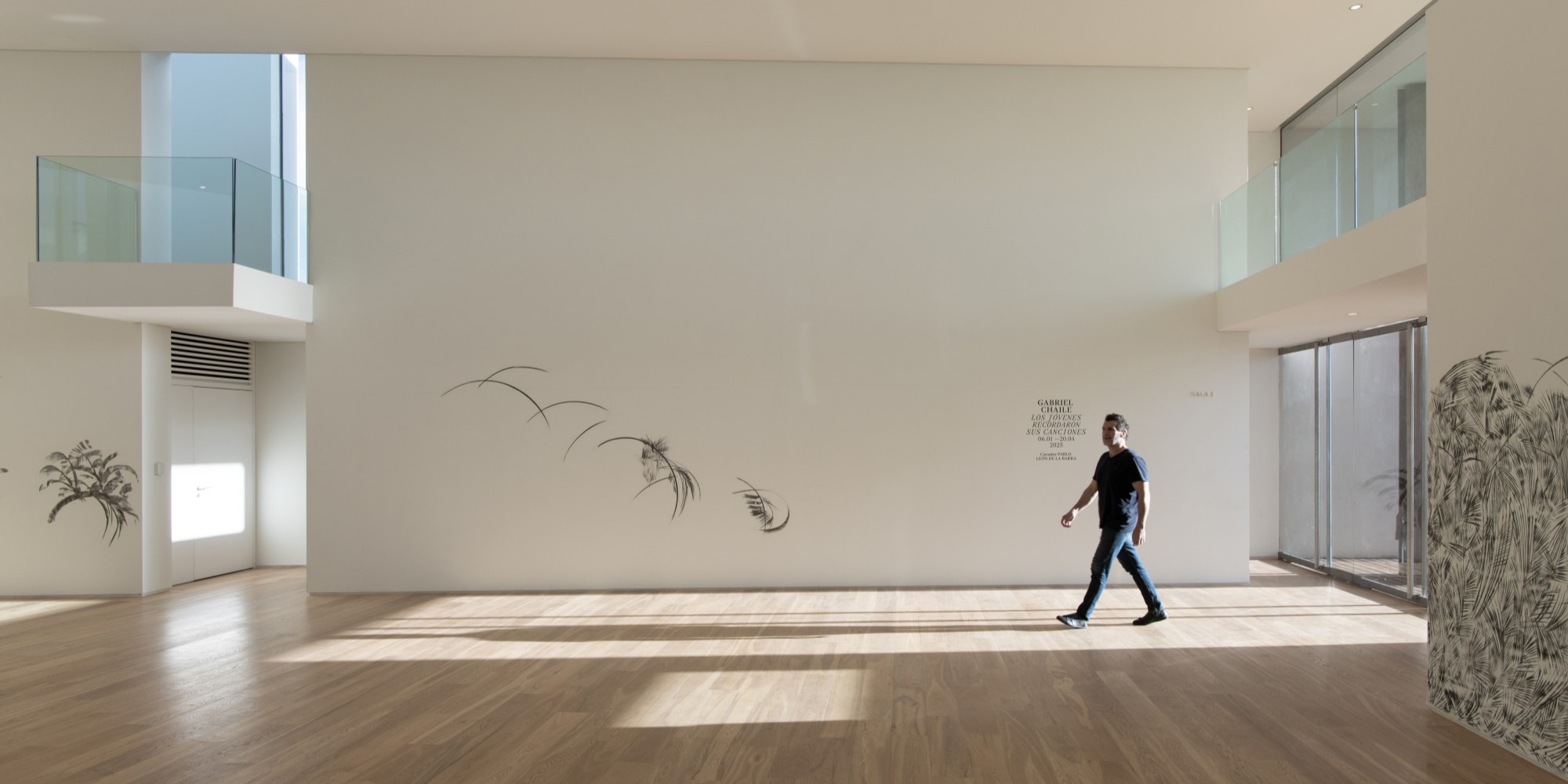
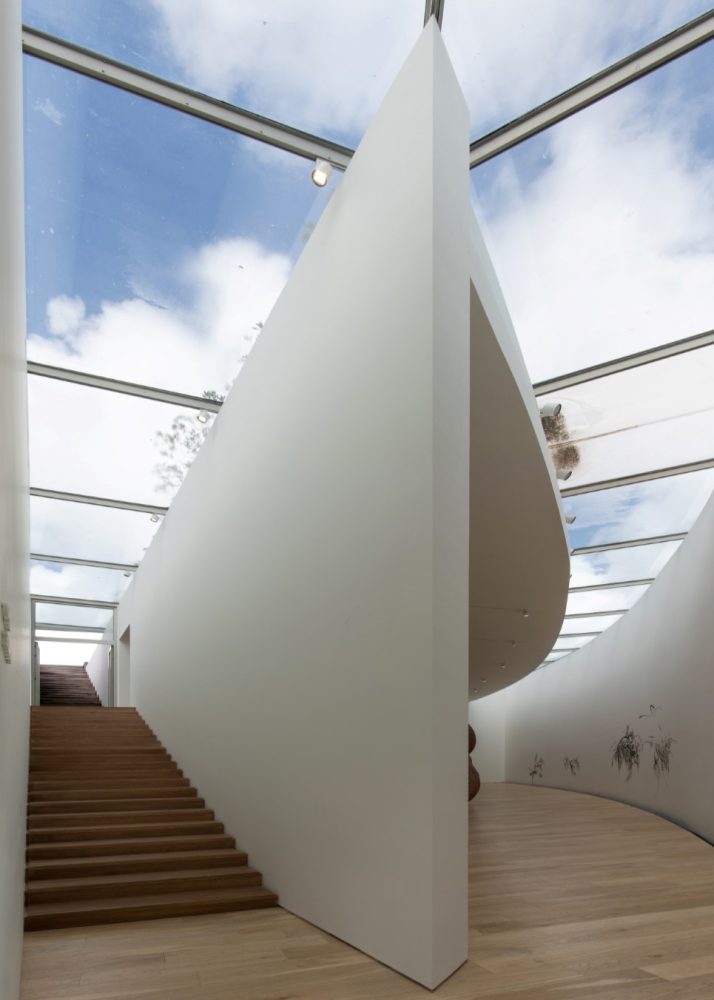
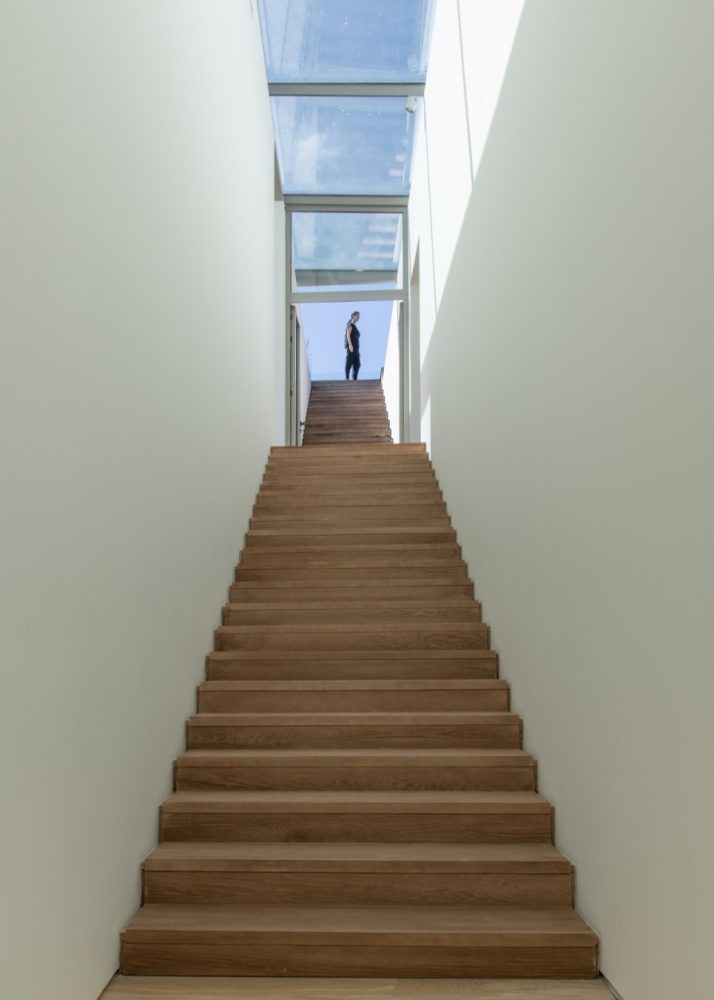
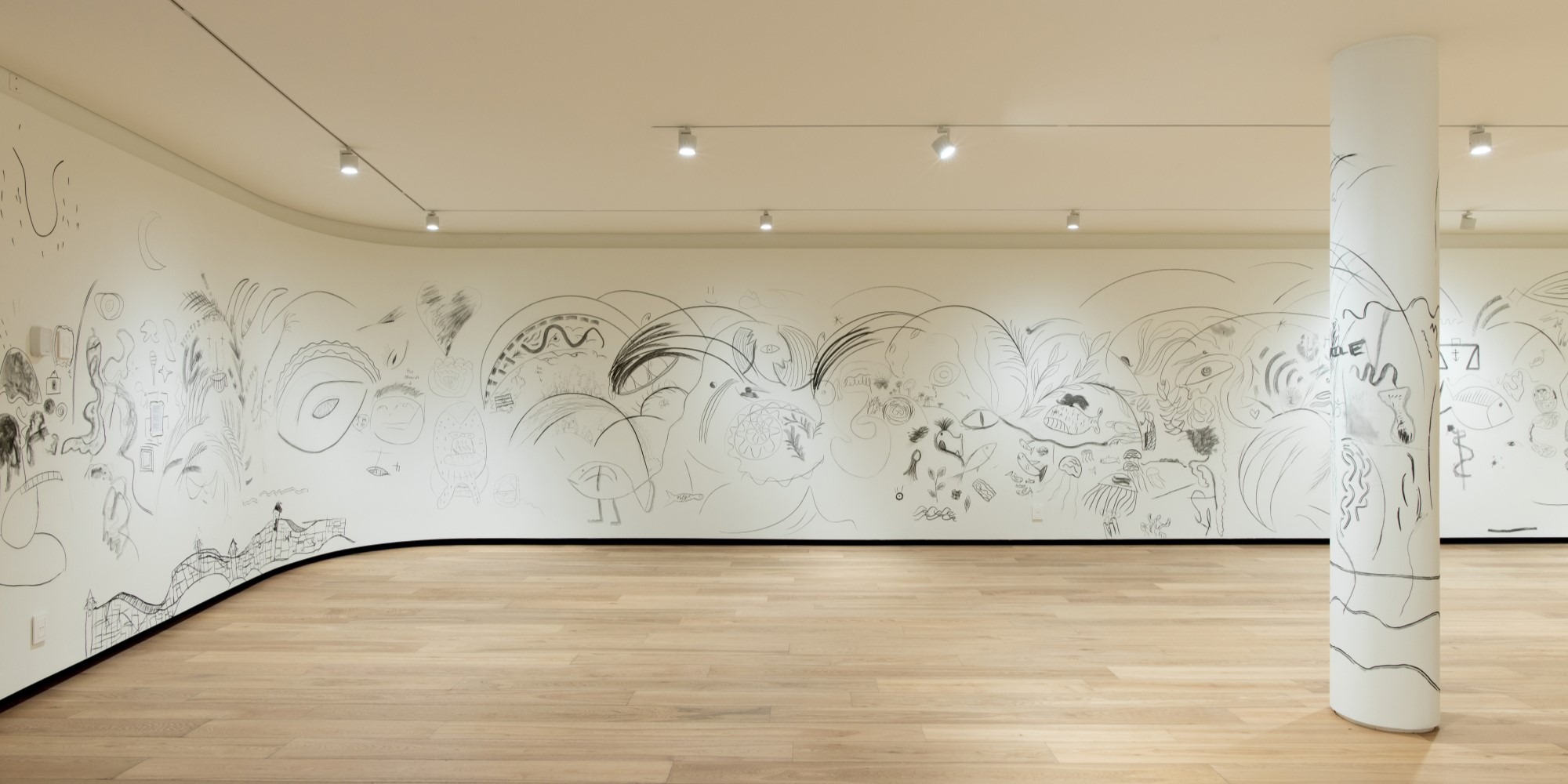
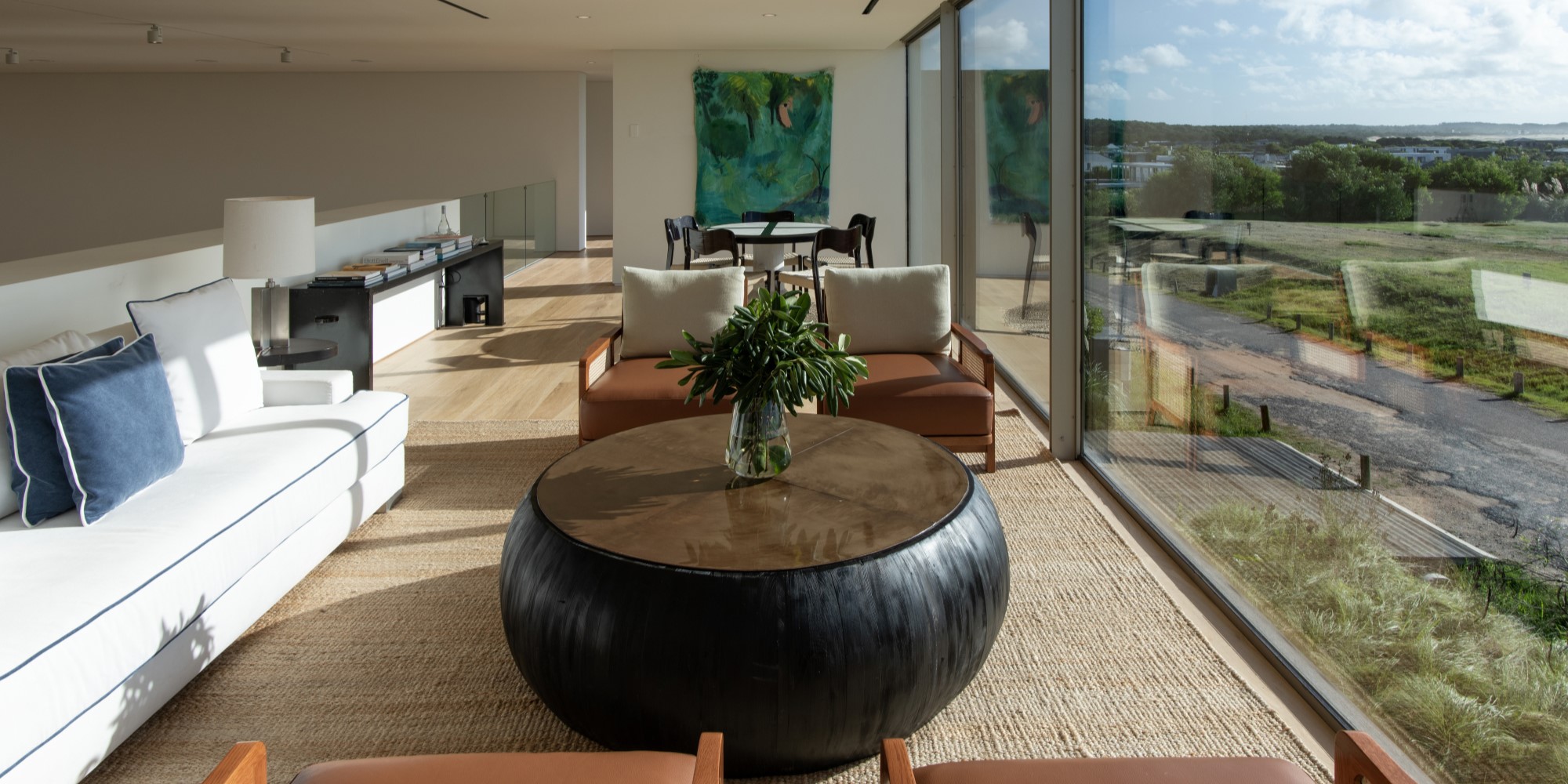
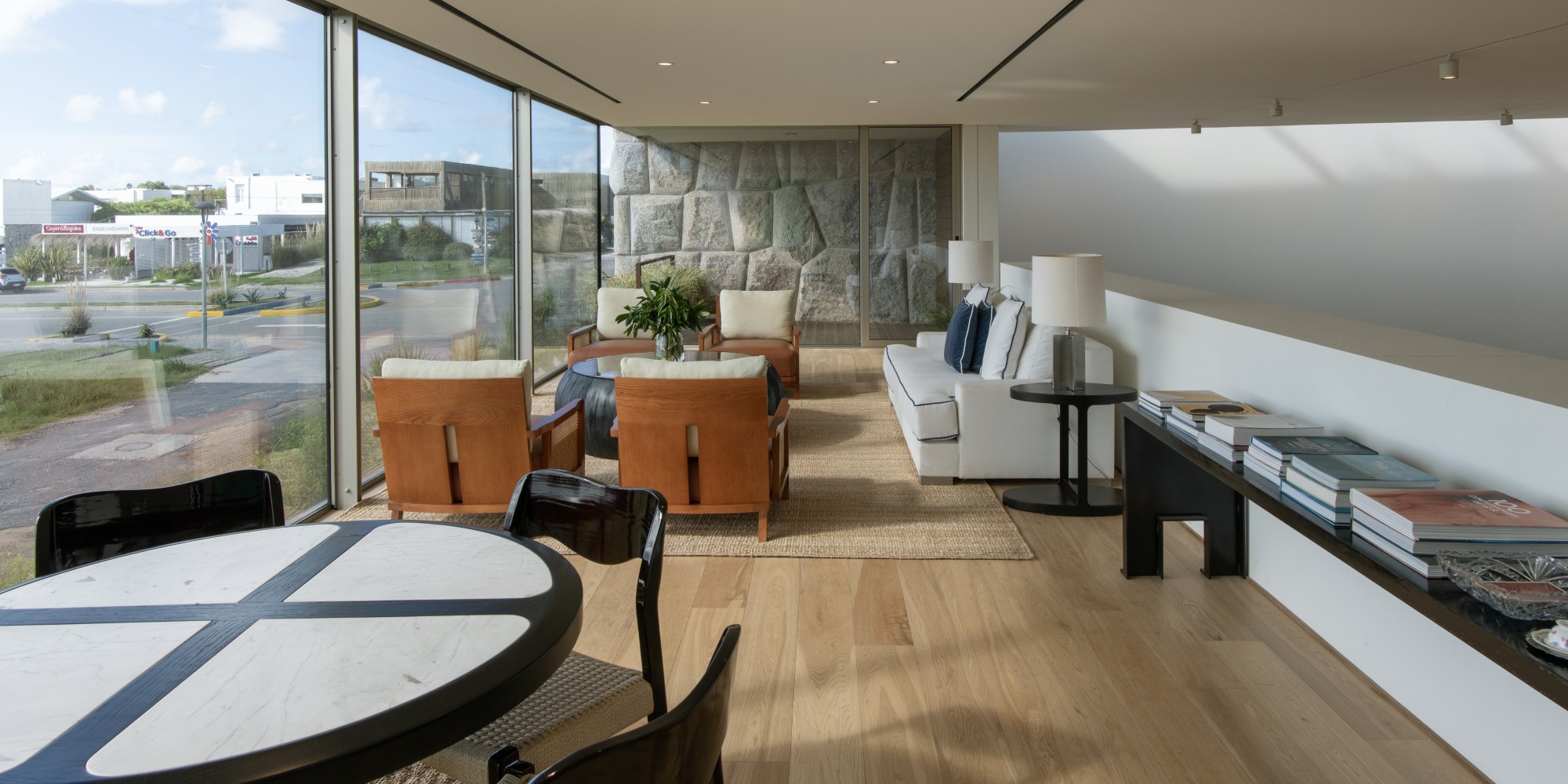
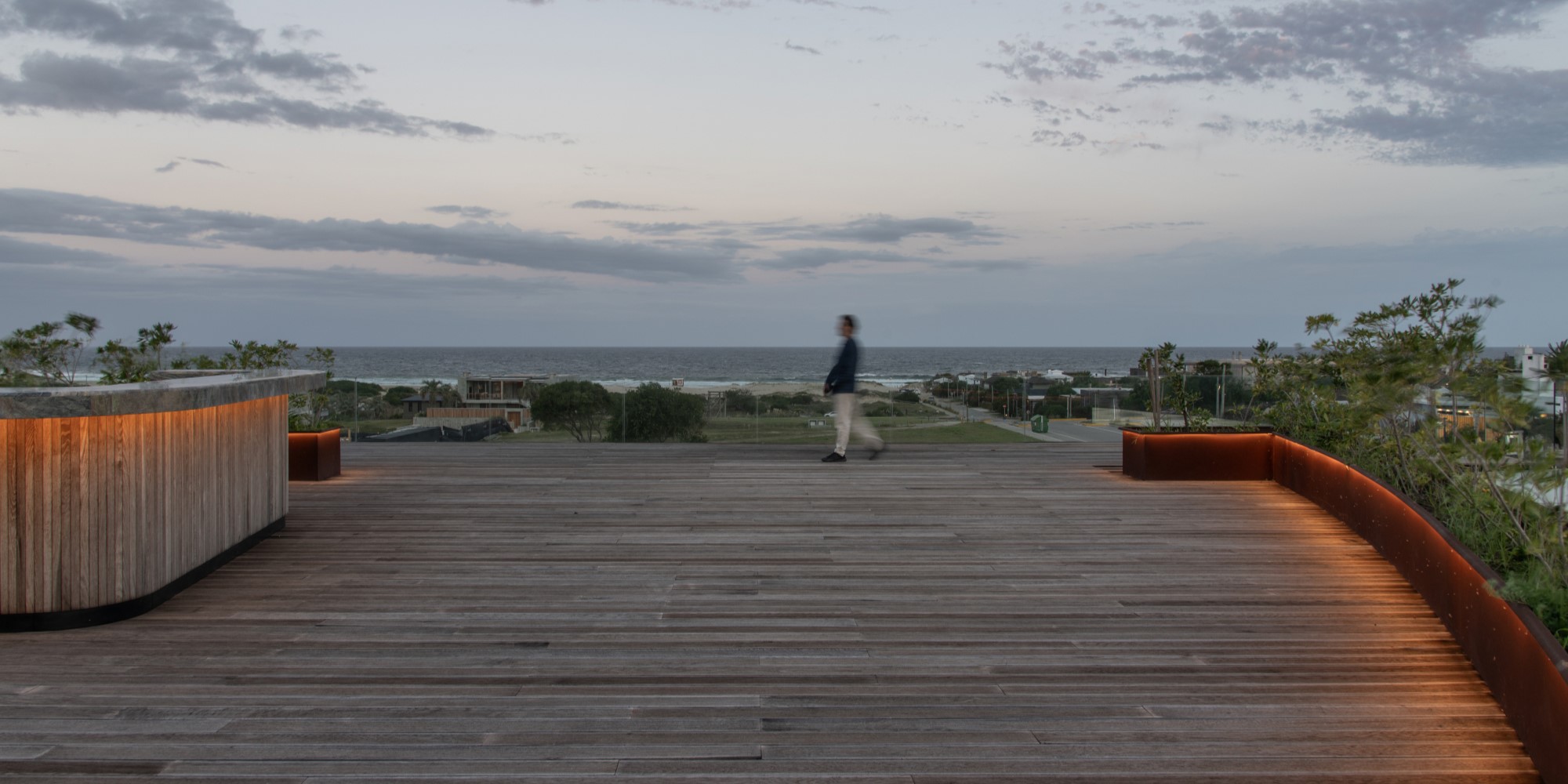
The interior of the building is made up of a large double-height main space under a perimeter skylight that floods the interior with natural light. Ancillary spaces occupy the east of the plan and stairs run along the north connecting the main gallery on the ground floor to a secondary gallery in the basement and an events terrace dominated by views and plantings on the roof. The building’s post-tensioned concrete floor slabs allow enormous spans and highly flexible gallery configurations. White plaster and natural wood finishes provide a neutral backdrop for the artwork displayed within.